Automation, Software & Exit Strategy
⏱ 7 min read
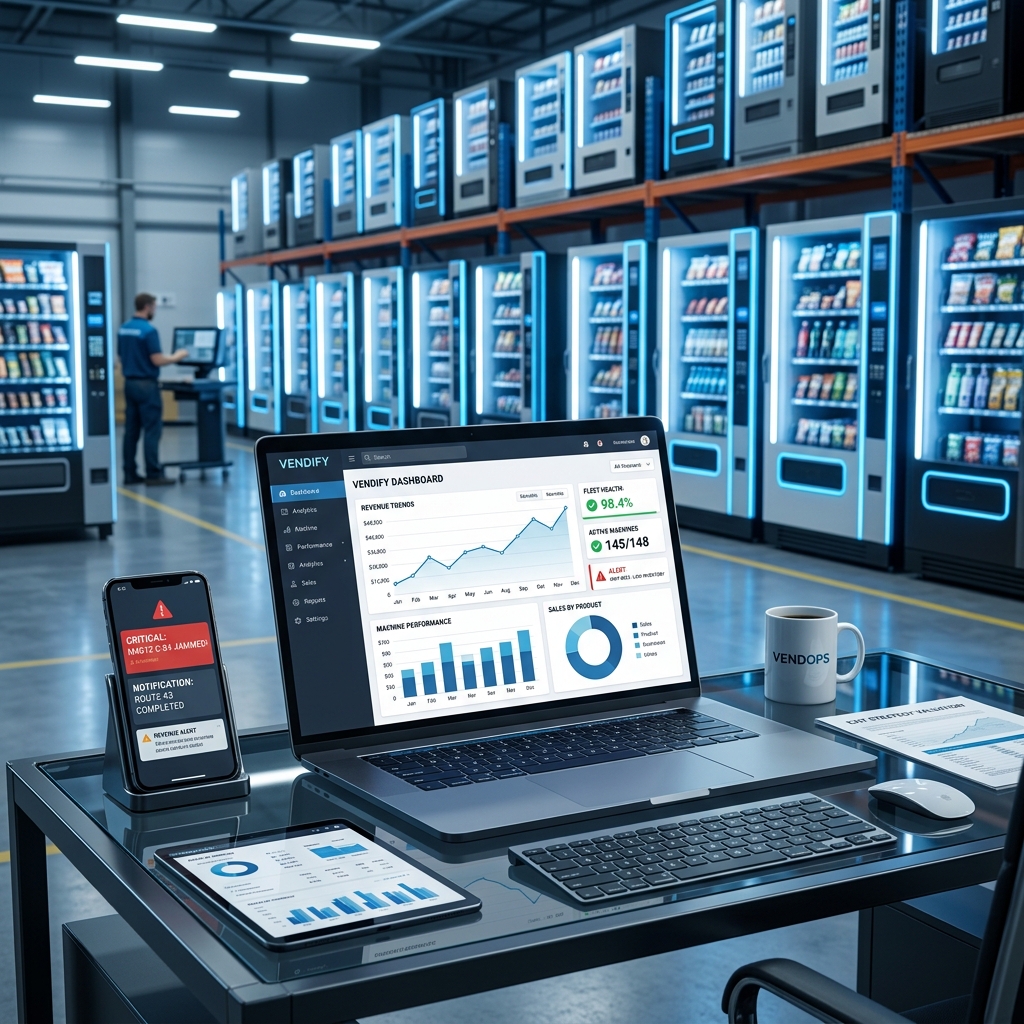
The tech stack for a larger route: fleet dashboards, automated stock alerts, sales reports, and mobile monitoring.
Automation, Software, & Exit Strategy
A systemized vending route is a valuable financial asset that can be sold on the open market. Buyers are not purchasing old machines; they are purchasing exclusive contracts and recurring cash flows. To maximize the valuation of your business when you exit, you must build a system that runs autonomously without your daily physical involvement.
This lesson covers the automation tech stack, the agreement terms buyers look for, how routes are valued, the due diligence list, a contract transfer rider, and the step-by-step exit timeline.
The Automation Tech Stack
To manage a 50+ machine route from your phone, integrate these automated systems:
- Telemetry & VMS: Use Parlevel VMS or Cantaloupe Go to automate inventory pre-kitting, route mapping, and machine error tracking.
- Accounting Automation: Link your VMS sales reports directly to QuickBooks Online using integration bridges (like Zapier or Sync2QBO) to eliminate manual entry.
- Customer Feedback QR Codes: Mount a custom sticker on every machine with a QR code. Customers scan the code to report a jam or request a refund. The request triggers a ticket in your VMS, and refunds are processed digitally via Venmo or Cash App, keeping customers happy.
Software & Hardware Platform Pricing Comparison
Review this pricing structure to evaluate software overhead as your route scales:
| Software Name | Primary Function | Monthly Cost | Transaction Fee % | Core Features |
|---|---|---|---|---|
| Parlevel VMS | Route management & telemetry | $15.00 - $30.00 / machine | N/A | Pre-kitting, routing optimization, driver tracking, inventory logs. |
| Nayax Telemetry | Cashless payment processing | $7.95 - $9.95 / machine | 5.95% | VPOS Touch hardware support, MDB integration, cellular connection. |
| Cantaloupe Go | Payment gateway & routing | $9.95 / machine | 5.50% | Integrated card reader telemetry, DEX audits, micro-market sync. |
| Sync2QBO | Accounting automation bridge | $15.00 flat / month | N/A | Syncs sales invoices from VMS directly to QuickBooks accounts. |
Customer Dispute Management & Service Failure Resolution
No matter how modern your equipment is, customer disputes will arise. A coin will jam, or a bag of chips will hang on a coil without dropping. How you handle these complaints determines your long-term reputation:
- Instant Refunds: Display a dedicated support line (e.g. via a Google Voice number or custom business email inbox) on the front decal of the machine. Set up a boilerplate auto-responder: "We apologize for the inconvenience. Please send us your selection number and Venmo/Cash App username."
- The Goodwill Multiplier: If a customer loses $1.50, instantly refund them $3.00. This minor incremental cost turns a frustrated customer into a brand advocate who will continue to use your machine instead of complaining to their HR manager.
- Automated Alerts for Fresh Foods: Set up webhook alerts using Zapier from your VMS to trigger push notifications on your driver's phone (or via a dedicated Slack channel) if a fresh food machine's temperature climbs above 41°F. This allows the driver to respond immediately, preventing inventory spoilage and FDA compliance violations.
Securing & Retaining Location Contracts
Your location agreements are the real value of your business. Buyers are not purchasing old machines; they are purchasing exclusive access to cash flows.
- Exclusivity: every agreement should say you are the only vending provider on the property during the term.
- Auto-Renewal: a 1-year term that renews automatically for further 1-year terms unless either party gives 60 days' written notice.
- Assignment: a clause letting you transfer the agreement to a buyer of your route, with notice to the location. Without it, a buyer may have to win every location again.
- Successors: a clause stating the agreement binds whoever takes over the location's business, so a change of ownership doesn't end it automatically. (This is not a "right of first refusal", which would give someone the first chance to match an offer.)
All of these are in the location agreement from Module 2, Lesson 3.
Your Location Agreement
Use the fill-in agreement in the placement kit at /kit/agreement, which has a no-commission and a tiered-commission version. Module 2, Lesson 3 explains every clause, including the trial and removal, assignment and access clauses buyers will check during due diligence. It is general information, not legal advice: have a local attorney review it before you rely on it.
Route Valuation & Exit Process
When you sell, buyers price the route from its documented profit:
Asking price = Documented annual net profit x Multiple
- The multiple: set by the buyer and the market, not by a formula. It depends on how strong and transferable your agreements are, how old your equipment is, and how well your records hold up. Look at recent vending route listings on business-for-sale sites, or ask a business broker, before you set a price.
- The Sales Timeline:
- Month 1-2: Preparation: Compile 3 years of tax returns, clean up the machines, and lock in auto-renewals on key contracts.
- Month 3: Valuation & Listing: List the route on business marketplaces (BizBuySell, Vending Marketplace) or pitch local competitors.
- Month 4-5: Due Diligence: The buyer reviews telemetry reports, audits cash collections, and inspects equipment.
- Month 6: Closing & Transition: Sign the asset purchase agreement, transfer location contracts, and train the buyer's staff during a 2-week transition period.
Due Diligence Documentation Checklist
When preparing to sell your vending business, compile the following documentation to facilitate a smooth due diligence process for prospective buyers:
- Telemetry Records: Export 12-24 months of raw sales data from your VMS dashboard showing month-by-month cash and credit transactions for each machine.
- Tax Filings: Provide three years of business tax returns and local sales tax reports matching your reported revenue.
- Contract Folder: Organize signed Location Agreements for all active sites, highlighting exclusivity clauses and auto-renewal terms.
- Asset Inventory: Detail the make, model, serial number, manufacture date, card reader type, and purchase value of all machines in service and in storage.
- Supplier Log: Provide a list of all active wholesale supplier accounts, equipment dealers, and maintenance contacts.
- Maintenance Logs: Show history of major repairs (compressor swaps, logic board upgrades) to verify equipment has been properly maintained.
Boilerplate Lease Transfer Rider
A rider like this, attached to the asset purchase agreement, transfers your location agreements to the buyer at closing. It only works where each agreement allows assignment. Treat it as a starting point for your attorney, not a finished document:
CONTRACT ASSUMPTION AND TRANSFER RIDER

This Rider is attached to and made part of the Asset Purchase Agreement dated ____________, 20__ by and between [Seller Name] ("Seller") and [Buyer Name] ("Buyer").

WHEREAS, Seller is party to certain Vending Location Agreements (the "Contracts");
WHEREAS, Seller desires to assign and Buyer desires to assume all rights and obligations under the Contracts;

NOW, THEREFORE, the parties agree as follows:
1. ASSIGNMENT: Effective as of the Closing Date, Seller hereby assigns, transfers, and sets over to Buyer all of Seller's right, title, and interest in and to the Contracts listed in Schedule A.
2. ASSUMPTION: Buyer hereby assumes and agrees to perform all obligations, covenants, and agreements of Seller under the Contracts arising after the Closing Date.
3. INDEMNIFICATION: Seller shall indemnify and hold Buyer harmless from any liabilities arising under the Contracts prior to the Closing Date. Buyer shall indemnify and hold Seller harmless from any liabilities arising after the Closing Date.

Seller Signature: __________________   Date: _________
Buyer Signature: ___________________   Date: _________
Final Note
Congratulations on completing the Vending Machine HQ course. You now have a plan for finding locations, buying and running machines, and growing a route you could one day sell. The next step is action: work your prospect list with the 30-day routine (Module 2, Lesson 4), and get your first agreement signed before you buy a machine.